AR-15 — Complete Builder's Guide
Twelve lessons covering every major AR-15 system: lower, upper, BCG, charging handle, barrel, gas system, handguard, muzzle device, trigger, stock/buffer, grip, and magazines/caliber.
Lower Receiver
The serialized heart of the AR-15 — legally the firearm itself.
The lower receiver is the only part of an AR-15 that is legally the firearm in the eyes of the ATF. It carries the serial number, must be transferred through an FFL, and is the foundation every other component attaches to. Understanding the lower is the first step in understanding the platform — once you grasp how it hosts the fire-control group, mag well, and buffer tower, every other AR-15 part starts to make sense.

What it does
The lower receiver houses the trigger group (hammer, disconnector, trigger, safety selector), accepts the magazine through the magazine well, anchors the buffer tube and stock at the rear, and mates to the upper receiver via two takedown pins. It is the only forged or billet-machined component that ships with a serial number.
Forged vs billet vs polymer
Forged 7075-T6 aluminum lowers are the industry standard — strong, light, and inexpensive (~$60-150). Billet lowers are CNC-machined from a single block of aluminum and offer flashier aesthetics and tighter tolerances (~$150-400). Polymer lowers exist (KE Arms, New Frontier) — they're lighter and cheaper but flex more under stress and are less proven for high-round-count use.
Mil-spec dimensions matter
True mil-spec lowers follow the TDP (Technical Data Package) — the exact dimensions used by Colt and FN for military rifles. Most aftermarket parts (LPKs, stocks, grips) are mil-spec compatible. Non-mil-spec lowers (like older Colt SP1s or some boutique brands) may require proprietary parts.
Compatibility with the upper
Any mil-spec lower mates with any mil-spec upper via the front (pivot) and rear (takedown) pins. The 'fit' between manufacturers may have slight play — solved with anti-rattle pins or a tensioning screw. This interchangeability is why the AR-15 ecosystem is so massive.
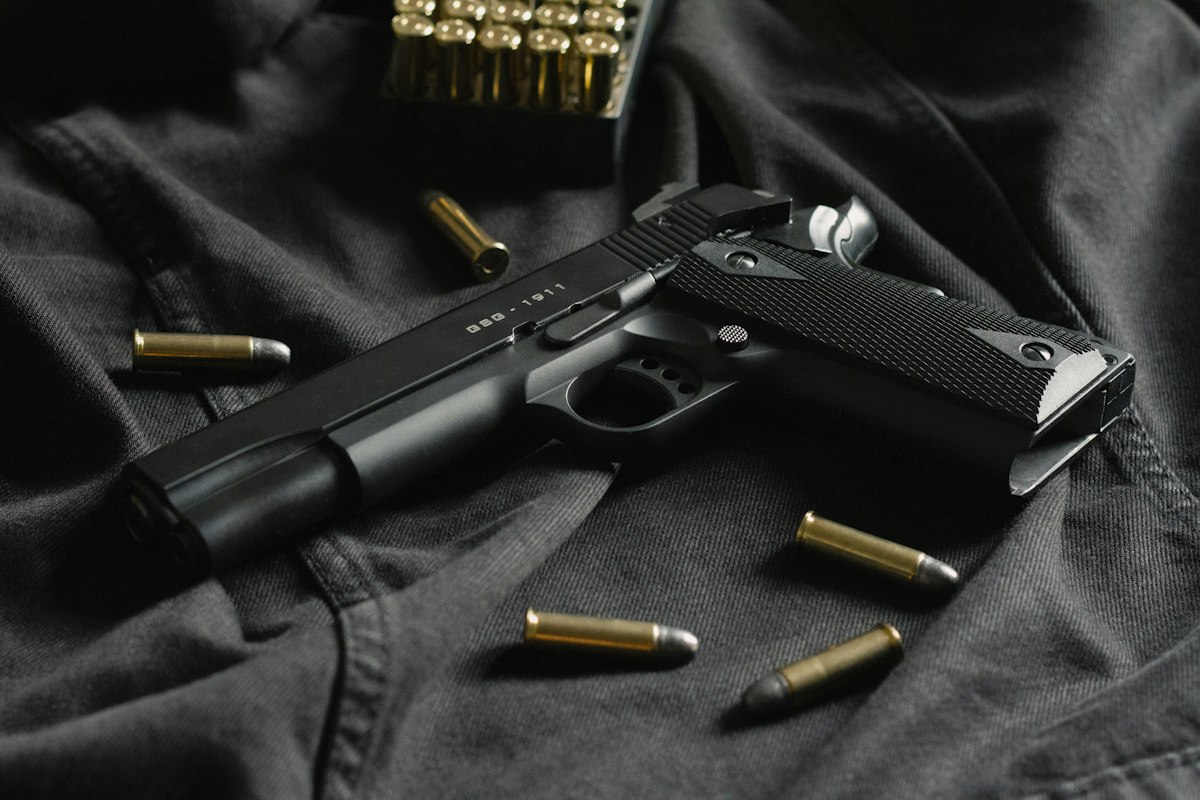
- The lower receiver IS the firearm — it carries the serial number.
- Forged 7075-T6 aluminum is the safe default for any first build.
- Mil-spec compatibility = your lower works with 95% of aftermarket parts.
- Lower + upper attach via two pins; any mil-spec lower mates any mil-spec upper.
FAQ (2)
- Can I buy an AR-15 lower online?
- Yes, but it must ship to a Federal Firearms Licensee (FFL) in your state where you'll complete the ATF 4473 transfer. You cannot have a serialized lower shipped to your home address.
- What about 80% lowers?
- An 80% lower is unfinished and not legally a firearm at point of sale. Once you complete the machining, it becomes a personally-made firearm. Federal law allows this for personal use but several states (CA, NJ, NY, WA, others) require serialization or ban them outright. Always check Chambered's compliance page for your state before starting.
Upper Receiver
The heart of the action — barrel, BCG, and charging handle all live here.
The upper receiver is where the AR-15's action happens. It hosts the bolt carrier group as it cycles, anchors the barrel through the barrel nut, mounts the handguard, and provides the Picatinny rail for optics. Unlike the lower, the upper is not legally the firearm — you can buy complete uppers online and have them shipped to your door.

Anatomy
The upper is a hollow tube with a Picatinny rail (or M1913 spec) machined into the top. The front threads accept the barrel nut, which clamps the barrel and indexes the gas tube. The rear contains the charging handle channel. The forward assist (small plunger on the right side) lets you manually push the bolt into battery if it short-strokes.
Flat-top vs A2 carry handle
Modern uppers are 'flat-top' — meaning the top is a flat Picatinny rail. Older uppers (A1/A2) had a fixed carry handle with iron sights. Flat-tops are universally preferred today because you can mount any optic. You can still add a removable carry handle if you want iron sights.
M4 feed ramps
The transition from the magazine to the chamber happens via 'feed ramps' — angled cuts at the chamber face. M4-style feed ramps are wider and smoother than original AR-15 ramps; pair them with an M4-cut barrel for best reliability. Most modern uppers are M4-cut by default.
Material
Same story as the lower — forged 7075-T6 aluminum is the default. Billet matched upper/lower sets are popular for aesthetic builds. Whatever you choose, it doesn't affect function — it affects appearance and price.
- Upper is NOT the firearm — ships to your door, no FFL needed.
- Flat-top with Picatinny rail is the modern standard.
- M4 feed ramps = better reliability with modern ammo.
- Forged 7075-T6 aluminum unless you want billet for aesthetics.
FAQ (2)
- Do I need a matched upper/lower set?
- No. Any mil-spec upper mates any mil-spec lower. Matched sets look nicer (consistent finish + tighter fit) but functionally identical.
- Is the forward assist necessary?
- Practically? Almost never. It's a holdover from Vietnam-era reliability concerns. Some boutique builders sell 'slick-side' uppers without it. Mil-spec uppers all have it because the TDP requires it.
Bolt Carrier Group (BCG)
The piston, the bolt, and the cycle — this is what actually fires the gun.
The BCG is the heart of the AR-15's operating cycle. Gas tapped from the barrel pushes the carrier rearward; the carrier extracts and ejects the spent case; the buffer spring drives it forward; the bolt strips a fresh round from the magazine and locks into the chamber. All of this happens in about 1/30th of a second.

Components
A BCG has the carrier (the big steel body), the bolt (eight lugs that lock into the barrel extension), the extractor (claw that pulls spent cases), the ejector (spring-loaded pin that flings them out), the firing pin (driven forward by the hammer), and the cam pin (rotates the bolt to lock/unlock).
Full-auto vs semi-auto carriers
'Full-auto' carriers have a longer rear lip that interacts with the auto-sear in select-fire rifles. Civilian semi-auto rifles don't need this — but full-auto carriers are heavier (better recoil management) and legal to own. Most aftermarket BCGs ship with the full-auto profile. The lip alone doesn't make your rifle full-auto.
Material and coating
Mil-spec carriers are 8620 steel; bolts are Carpenter 158 steel (very tough, resists case-head separation). Coatings range from standard phosphate (parkerized, matte black, mil-spec) to nickel-boron (slick, easy to clean, gray) to NP3 / NiB-X (slipperiest, premium tier). All work fine — coatings affect cleaning ease, not reliability.
MPI / HPT testing
Quality BCGs are batch-tested: HPT (high-pressure test) fires an overpressure round through the bolt to stress-test it; MPI (magnetic particle inspection) hunts for hairline cracks. Look for 'MPI/HPT' on the spec sheet. Brands like Toolcraft, BCM, Daniel Defense, and Sons of Liberty consistently meet this standard.
- BCG = carrier + bolt + extractor + ejector + firing pin + cam pin.
- Full-auto profile is legal and slightly better at managing recoil.
- MPI/HPT testing is non-negotiable for any quality BCG.
- Coating choice affects cleaning, not reliability.
FAQ (2)
- Will any AR-15 BCG fit any AR-15 upper?
- If both are mil-spec, yes. The exceptions are caliber-specific BCGs — a 5.56 BCG won't safely fire 6.5 Grendel because the bolt face diameter is different.
- How often should I clean my BCG?
- Every 500-1000 rounds for a casual shooter; more often if you're shooting suppressed (gas backflow fouls the carrier faster). The bolt locking lugs and the bolt tail are the highest priority cleaning zones.
Charging Handle
The T-shaped handle behind the receiver — your manual override.
The charging handle is the only way to manually cycle the action. You use it to load the first round, clear a malfunction, or lock the bolt to the rear for inspection. It looks simple — and the mil-spec version is — but it's also one of the most upgraded parts on a modern AR-15 because of how often your hand touches it.

How it works
The handle latches into the upper receiver via a small spring-loaded catch on the left side. You pinch the latch with your thumb, pull the handle back, and the carrier follows it. Release, and the buffer spring drives everything forward. The handle itself does NOT reciprocate when the gun fires — it stays put.
Mil-spec vs extended/ambi
Mil-spec charging handles use a small left-side latch. Extended ('extended latch') handles add a larger lever for easier reach with optics in the way. Ambidextrous handles (BCM Gunfighter, Radian Raptor, Geissele Airborne) put a lever on both sides — most modern shooters prefer ambi because optics often block the standard latch.
Why you might upgrade
If you run a magnified optic or a red dot with offset mount, the standard latch can be hard to access. An extended or ambi handle costs $40-80 and dramatically improves manipulations. It's one of the highest-value upgrades on the whole rifle.
- Charging handle = your manual control of the action.
- Mil-spec works fine; ambi handles work better with optics.
- Does not reciprocate when firing — stays put.
- $40-80 upgrade with disproportionate ergonomic gain.
FAQ (1)
- Why doesn't the handle move when I shoot?
- The bolt carrier has a slot the handle hooks into only when you pull it back manually. Once you release it, the carrier disengages and cycles freely.
Barrel
Length, twist rate, profile, and gas system — every choice has tradeoffs.
The barrel is where ammunition meets engineering. Every dimension — length, twist rate, profile, chamber spec, gas system, muzzle threading — affects accuracy, reliability, weight, sound, and legal classification. Getting the barrel right matters more than almost any other choice.

Length and legal class
Under federal law, a rifle barrel must be 16" or longer (measured chamber to muzzle including a permanently attached muzzle device). Anything shorter is a Short-Barreled Rifle (SBR) and requires an ATF Form 1 tax stamp ($200) plus 4-8 months of waiting. Pistol-class AR uppers (with a brace, not a stock) can have shorter barrels — but pistol classification has its own rules. State law often adds restrictions on top.
Twist rate
Twist rate is the inches per full rotation of the rifling. 1:7 stabilizes heavy bullets (62-77gr) — best for defensive 5.56 ammo. 1:9 splits the middle (55-69gr) — good for varminting. 1:8 is the modern compromise and what most quality barrels ship with. Match your twist rate to the bullet weight you'll shoot most.
Profile
Profile = how thick the barrel is along its length. Pencil (light, hot) → Government → Medium → Heavy (HBAR, accurate, heavy). Lightweight profiles are great for hunting and patrol; heavy profiles are for sustained fire and precision. Most all-around builds use Government or Medium.
Material and coating
Most barrels are 4150 chrome-moly-vanadium (CMV) steel — durable and affordable. Premium barrels use 416R or 17-4 stainless for accuracy. Coatings include chrome-lined (mil-spec, very durable, slightly less accurate), nitrided/Melonite (modern, durable, accurate), and bare stainless (most accurate, less corrosion-resistant). Pick chrome-lined or nitrided for a defensive rifle; stainless if precision is the priority.
Gas system length
Gas tap location matters. Carbine-length (7" port), mid-length (9" port), and rifle-length (12" port). Longer gas systems = softer recoil, lower bolt velocity, better reliability. Mid-length is the modern sweet spot for 14.5"-16" barrels.

- 16" minimum for a rifle without paperwork. <16" = SBR (tax stamp + wait).
- 1:8 twist is the modern do-it-all standard.
- Mid-length gas = softer recoil + better reliability than carbine-length.
- Chrome-lined or nitrided for defense; stainless for precision.
FAQ (2)
- Can I run a 14.5" barrel without SBR paperwork?
- Yes, IF you permanently attach (pin and weld) a muzzle device that brings overall length to 16". This is a common 'pinned-and-welded' configuration. The muzzle device cannot be removable.
- What's a 'machine gun' barrel?
- Nothing about a barrel makes a firearm a machine gun. Full-auto capability comes from the trigger group + selector — never the barrel.
Gas System
Direct impingement vs piston — how your AR-15 actually cycles.
When you pull the trigger, expanding propellant gas in the barrel has two jobs: push the bullet down the bore, and then cycle the action. How the gas does the second job is the most consequential engineering choice in the AR-15 family.

Direct impingement (DI)
Stoner's original design: gas taps from the barrel, runs back through a thin steel tube, and slams into the bolt carrier's gas key. The carrier acts as its own piston. DI is simple, light, accurate (no piston mass disrupting harmonics), and cheap. The downside: hot, dirty gas goes into the receiver, requiring more cleaning. ~85% of AR-15s in the world are DI.
Piston systems
Piston ARs (HK 416, LWRC, POF, SIG MCX) tap gas in the same place but push a short-stroke piston instead of routing gas to the receiver. Pros: cooler, cleaner, more reliable suppressed. Cons: heavier, more expensive, slight accuracy penalty, more parts to fail. Worth it for suppressed/full-auto/duty use; overkill for most civilians.
Adjustable gas blocks
An adjustable gas block lets you dial back gas flow — useful for suppressed shooting (reduces over-gassing and gas in your face) or competition (softer recoil). Brands: SLR Sentry, Superlative Arms, Geissele Super Gas Block. Cost ~$80-200. Set-and-forget for most shooters.
Gas system length recap
Carbine (7"): high pressure, snappy recoil, used on M4-style 14.5"-16" barrels. Mid-length (9"): the modern sweet spot — softer, more reliable, used on most quality 14.5-16" builds. Rifle (12"): used on 20" barrels — softest recoil but only fits longer barrels.
- DI is light, accurate, cheap — and what 85% of AR-15s use.
- Piston is cleaner and more reliable suppressed but heavier and pricier.
- Mid-length gas is the modern sweet spot for 14.5-16" barrels.
- Adjustable gas blocks unlock suppressor + competition use cases.
FAQ (1)
- Should my first AR be DI or piston?
- DI. It's lighter, cheaper, more accurate, and easier to get parts for. Only consider piston if you're going to shoot heavily suppressed or for duty/LE use.
Handguard
Free-float vs drop-in — and why M-LOK won.
The handguard does three jobs: protects your support hand from the barrel's heat, provides mounting real estate for lights/lasers/sights, and (if it's free-float) prevents your grip from flexing the barrel and ruining accuracy. The handguard market is huge — picking right comes down to mounting standard, length, and weight.

Free-float vs drop-in
Drop-in handguards clamp around the barrel via the front sight base and the delta ring. Cheap, easy to install — but any force on the handguard transmits to the barrel and degrades accuracy. Free-float handguards attach ONLY to the upper receiver via the barrel nut; the rest of the handguard floats around the barrel touching nothing. Free-float = better accuracy + better mounting. Drop-in is legacy.
M-LOK vs KeyMod vs Picatinny
Picatinny (1913 spec) — full-length rails on top/bottom/sides. Heavy, snags clothing, but universal mounting. KeyMod — proprietary slots (now mostly dead). M-LOK — Magpul's modular slot system, won the market by 2020. Almost every modern handguard is M-LOK with a Picatinny top rail. You attach accessories (lights, QD swivels, hand stops) directly to M-LOK slots via T-nuts.
Length
Handguard length should generally cover the gas block. For a 16" barrel with mid-length gas, that's roughly 13-15". Longer handguards let your support hand reach further forward (modern thumb-over grip) — more leverage, more control. The 13.5" SOPMOD profile is the sweet spot for most 16" builds.
Material
Aluminum (6061 or 7075) is the standard. Some premium options use carbon fiber (Brigand, Faxon) for weight savings. Polymer handguards exist but are rare on quality builds. Most M-LOK handguards weigh 10-14oz for a 13.5" length.
- Free-float for accuracy and mounting flexibility.
- M-LOK is the modern mounting standard — buy nothing else.
- 13.5" length is the sweet spot for 16" barrels.
- Aluminum unless you have a specific reason to go carbon fiber.
FAQ (1)
- Do I need a full-length top rail?
- Almost always yes. Even if you only run one optic, the rail lets you co-witness backup iron sights or change mounting position. M-LOK handguards include a full top rail by default.
Muzzle Device
Brake, comp, flash hider, or suppressor mount — pick your tradeoff.
Everything that screws onto the end of your barrel is a muzzle device. Each type makes a deliberate tradeoff: less recoil, less flash, less concussion, or being a suppressor host. Pick based on where and how you shoot.

Flash hiders
Hide the muzzle flash from the shooter (preserves night vision) and from observers. A2 'birdcage' is the original — cheap, light, effective. Modern flash hiders (Surefire SF3P, Smith Vortex, KAC Triple Tap) are more effective and quieter. Best choice for defensive/night use.
Muzzle brakes
Brakes vent gas sideways to counteract recoil. Excellent for competition or precision shooting (rifle stays on target). Downside: massive concussion to the sides — your buddy 10 feet away will hate you indoors. Examples: Precision Armament M4-72, Lantac Dragon.
Compensators
Comps split the difference — vent up instead of sideways to reduce muzzle rise without as much side blast. Good for 3-gun competition and faster follow-up shots. Examples: BCM Gunfighter Comp, VG6 Epsilon.
Linear compensators
Linear comps direct sound and concussion forward — much friendlier to neighbors at indoor ranges. They don't reduce recoil meaningfully but they're great QoL upgrades. Example: KAK Industry Slimline.
Suppressor-host devices
If you plan to run a suppressor (after $200 ATF tax stamp + 8-12 month wait), pick a muzzle device that matches your can's mount: Surefire SOCOM, Dead Air Keymo, SilencerCo ASR, etc. The device stays on the gun; the suppressor attaches/detaches as needed.
- Flash hider for defense; brake for precision; comp for competition.
- Brakes are LOUD to anyone next to you.
- Linear comps are the polite indoor-range choice.
- Match suppressor-host devices to your specific can's mount.
FAQ (1)
- Are flash suppressors restricted by state?
- Yes — several states (CA, NJ, NY, MA, others) regulate flash suppressors as a 'feature' that can trigger assault weapon classification. Always check the Chambered compliance page for your state before installing one.
Trigger Group
Mil-spec, drop-in, or two-stage — the biggest accuracy upgrade dollar-for-dollar.
The trigger is the only interface between you and the rifle's mechanical action. A bad trigger guarantees bad shooting; a good trigger transforms the rifle. It's also the upgrade most shooters feel most immediately — more than optics, barrels, or stocks.

Mil-spec trigger
The standard issue trigger — hammer, disconnector, trigger, two springs, two pins. Pull weight 5-9 lbs, often gritty. Costs $25-50. Reliable, but the worst shooting experience of any modern AR trigger.
Single-stage drop-in
A pre-assembled, self-contained cassette that drops into the lower as one unit. Single-stage means one continuous pull until break. Examples: Geissele SSA (4.5 lb crisp), CMC Triggers, Timney Drop-in. $130-250. Massive felt improvement over mil-spec.
Two-stage triggers
First stage takes up most of the weight (3-4 lbs), then a clean 'wall' followed by a light second-stage break (1-2 lbs). Used by competitive shooters and precision shooters. Examples: Geissele SSA-E, LaRue MBT-2S, ALG QMS. $150-300.
Adjustable / match triggers
Premium triggers from Geissele Super 3-Gun, Timney Calvin Elite, TriggerTech all offer adjustable weight, take-up, and overtravel. $300-500. Diminishing returns for casual shooters; meaningful for competitive use.
- Trigger upgrade = biggest felt improvement, dollar for dollar.
- Mil-spec works; drop-ins are better; two-stage is precision-grade.
- Geissele, CMC, Timney, LaRue are the proven brands.
- Skip the cheapest drop-ins — pull-weight consistency suffers.
FAQ (2)
- Can I install a drop-in trigger myself?
- Yes — drop-ins are designed for end-user installation in under 10 minutes. Push out two pins, drop the cassette in, push the pins back. No gunsmithing required.
- Is a lighter trigger 'less safe'?
- A quality light trigger is fine. The risk isn't weight — it's having your finger on the trigger when you don't intend to shoot. Trigger discipline is the only real safety.
Stock & Buffer System
Adjustable carbine stock, fixed rifle stock, or pistol brace — and the buffer that makes them work.
The stock anchors the rifle to your shoulder, and inside it (or in the buffer tube) is the spring + buffer that drives the bolt forward. Length of pull, weight, and adjustability all affect how the rifle shoots — and the buffer weight affects how it cycles.

Carbine stock (M4 style)
Adjustable in length via a release lever; six-position is standard. Lets multiple shooters or different armor configurations use the same rifle. Examples: Magpul CTR (premium standard), B5 SOPMOD, Mission First Tactical Battlelink. $50-150. Default choice for most builds.
Fixed rifle stock (A1/A2)
Non-adjustable, longer length of pull (~13.5"). Better cheek weld and shoulder anchor. Heavier. Used on 20" precision/competition builds. Magpul PRS is the heavy-hitter for precision.
Pistol brace
Designed for one-handed firing from a wrist strap, the brace evolved into a de-facto stock for AR pistols. Federal regulation around braces has shifted multiple times — currently (Feb 2026) the situation is fluid; the 2023 ATF rule was largely vacated, but pending litigation may change this again. Always check current law. Examples: SBA3, SBA4, Maxim CQB.
Buffer weight
Buffers come in standard (3.0 oz), H (3.8), H2 (4.6), H3 (5.4), and 'heavy' variants. Heavier buffers slow the bolt down — good for short-stroked carbine gas systems or to soften recoil. If your gun ejects shells weakly (5-7 o'clock) you might be over-buffered; ejecting at 4-5 o'clock is healthy.
Buffer tube types
Mil-spec carbine tube (1.148" OD) or commercial (1.168" OD). Mil-spec is more common and what most aftermarket stocks fit. Always verify your stock matches your tube.
- Adjustable carbine stock is the default for general-use builds.
- Heavier buffer (H, H2) softens recoil and helps short gas systems.
- Mil-spec buffer tube is the safer choice — more stock compatibility.
- Pistol brace legality is shifting; check current law before building.
FAQ (1)
- Why does my ejection pattern matter?
- It tells you if the rifle is over- or under-gassed. 4-5 o'clock = healthy. 3 o'clock or forward = over-gassed (try heavier buffer). 5-7 o'clock = under-gassed (check gas block / try lighter buffer).
Pistol Grip
The cheapest meaningful upgrade — and a feature-flagged item in restrictive states.
The pistol grip is the part of the rifle your firing hand grabs. It's small and cheap but disproportionately impacts shooting comfort. It's also one of the 'features' some states use to define an 'assault weapon' — meaning swapping it can affect legal status.

Standard mil-spec
The A2 grip that ships with most lower parts kits. Steep angle (15°), plastic, basic finger groove. Functional but uncomfortable for many shooters. Cost: free with most LPKs.
Modern ergonomic
Magpul MOE, MIAD, K2; BCM Gunfighter; Hogue OverMolded; Ergo. These have shallower angles (closer to vertical), better palm swells, and rubberized or textured surfaces. $15-40. The single best $25 you can spend on a budget AR.
Featureless / pin-on grips
In feature-restricted states (CA, CT, MD, NJ, NY, others), a 'pistol grip' is one of the banned features. Solutions: fin grips (Thordsen FRS-15, Hera CQR), pin-on conversion blocks, or fully featureless lowers. These keep the rifle compliant but change the manual of arms.
- Default A2 grip is uncomfortable; $25 upgrade fixes it.
- Magpul MOE, BCM Gunfighter, Hogue are proven defaults.
- Featureless builds use fin grips to comply with state law.
- Grip is a 'feature' under several states' AWB definitions.
FAQ (1)
- Will any grip fit any mil-spec lower?
- Yes — the grip attaches via a single screw through the grip into the lower. Universal across all mil-spec lowers.
Magazines & Caliber
5.56 NATO is the default — but the lower works with 9mm, .300 BLK, 6.5 Grendel, and more.
The AR-15 platform isn't married to 5.56 NATO — by swapping the upper (sometimes just the barrel + bolt), the same lower can host 9mm, .22 LR, .300 BLK, 6.5 Grendel, 6mm ARC, .224 Valkyrie, and more. The magazine usually changes with the caliber.

5.56 NATO / .223 Rem
The default. Standard 30-round STANAG magazines (Magpul PMAG, Lancer L5AWM, OKAY Industries SureFeed, Brownells GI) cost $10-18. Magazine capacity is restricted in many states — 10 in CA/CO/NJ/MD/NY/HI, 15 in CT/VT. Always check your state's limit on Chambered.
.300 Blackout
Uses the SAME magazines as 5.56 but requires a .300 BLK barrel + bolt. Subsonic .300 BLK rounds pair with suppressors for very quiet shooting. The bullet is wider but the case mouth is the same, so magazines feed both calibers — but NEVER load .300 BLK into a 5.56 chamber (catastrophic failure).
9mm AR (PCC)
Dedicated 9mm uppers use either Glock-pattern or Colt-pattern magazines. Pistol-caliber carbines are cheap to shoot (~$0.20/round) and quiet enough for indoor ranges. Some 9mm builds need a dedicated 9mm lower with a magazine well block.
6.5 Grendel / 6mm ARC
Better long-range performance than 5.56. Requires a 6.5 Grendel or ARC barrel + bolt + dedicated magazines (Type II Grendel). The same lower works fine.
- 5.56 NATO is the default; the lower works with many calibers.
- Magazine capacity limits vary by state — check Chambered first.
- .300 BLK uses 5.56 magazines but a DIFFERENT chamber.
- PMAG, Lancer, and OKAY Industries SureFeed are the proven defaults.
FAQ (2)
- Are 30-round magazines legal everywhere?
- No. CA, CO, CT, HI, MD, MA, NJ, NY, VT, WA, DC all restrict capacity. Limits range from 10 to 15. Always check the Chambered state compliance page.
- What's a 'pinned' magazine?
- A magazine that has been physically blocked at the top so it can only hold the legally-allowed number of rounds. Common in CA/NJ/NY pinned-to-10.
Catalog parts for the Basic AR-15
Parts the Chambered builder offers for this platform, with retailer pricing.
- Stripped Lower Receiver — Lower Receiver · $179 · Brownells
- M-LOK Stock — Stock · $89 · Optics Planet
- Matched Upper Receiver — Upper Receiver · $229 · Midway USA
- 16" Carbine Barrel — Barrel · $149 · Brownells